
We were 40 miles from the launch on a Friday afternoon when I heard it.
That awful *thump-thump-thump* from the passenger side. I pulled onto the shoulder of Route 5, and there it was – a trailer tire shredded down to the belts. The kids were hot. Gigi was patient. I was sweating over a jack on the side of a busy highway.
Here’s the thing that stung: that tire wasn’t worn out. It was five years old, dry-rotted, and never built for the weight of a loaded pontoon in the first place. A blowout like that turns a fun day into a rescue mission fast.
A good set of trailer tires is the cheapest insurance you’ll ever buy for your family’s boating season. They don’t make your boat faster or prettier. They just get everyone to the water and back home safe.
In this guide, I’ll walk you through the trailer tires I’d trust under my own rig, from budget to premium. Then I’ll show you exactly what to look for so you spend less time on the shoulder and more time making memories.
*Disclosure: This post contains affiliate links. If you purchase through my links, I may earn a small commission at no extra cost to you. I only recommend products Gigi and I have personally used or thoroughly researched for our family.*
Not sure your setup is right to begin with? Start with our [Best Trailer Guides for Pontoon Boats] – tires are only one piece of towing safely.
Quick Comparison – Best Pontoon Trailer Tires 2026
Here’s the short version if you’re in a hurry. For most families towing a single pontoon, a quality ST radial in the correct load range is the right call – not a cheap tire that happens to fit the rim.
![Pontoon boat on a trailer ready to launch, trailer tires in focus]](https://cdn3.wealthyaffiliate.com/uploads/2954168/sitecontent/reference_1785199269_display_1785199293_cropped.webp?1785199294)
The 6 Best Pontoon Trailer Tires for 2026
I picked these for the way real families tow – highway miles, hot pavement, a heavy boat, and long stretches sitting in the driveway between trips. Each one earns its spot for a different reason.
Goodyear Endurance ST Radial — Best Overall
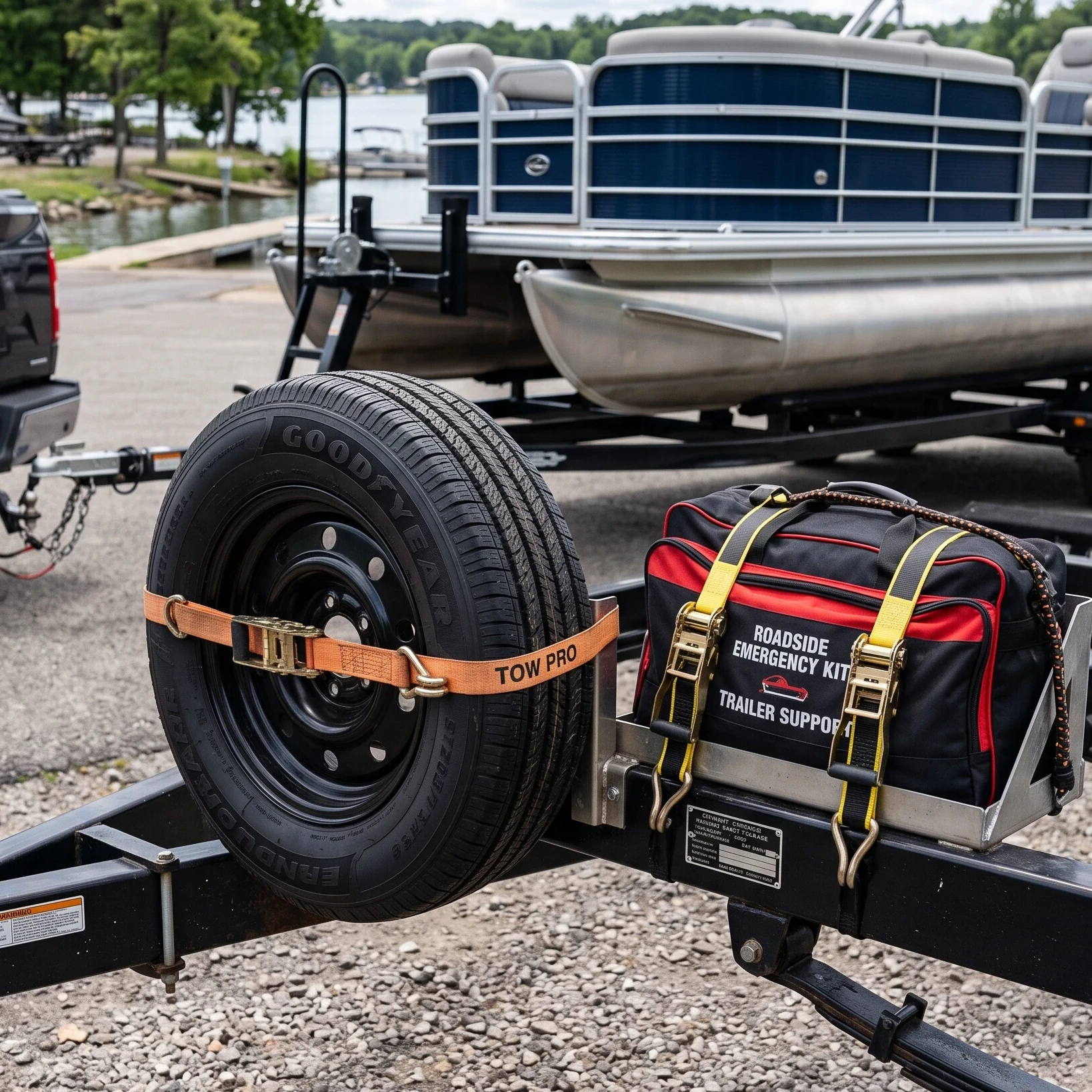
Who it’s best for: Families who tow a lot of highway miles and want a tire they don’t have to think about. This is my top all-around pick.
What I like:
– Built and backed in the USA, with a reputation earned over a lot of hard miles.
– Runs cooler on the highway, and heat is what kills trailer tires.
– Handles higher speeds better than most ST tires, which matters on the interstate.
What could be better:
– It costs more than the budget options, so you feel it up front.
Skipper Sam’s take: After that Route 5 mess, I put Endurance tires on our trailer and never looked back. Gigi and I towed to three different lakes last summer and I honestly stopped worrying about the tires. That peace of mind is worth every extra dollar when you’ve got grandkids in the truck.
Maxxis M8008 ST Radial – Best for Heavy Loads
![Maxxis M8008 ST radial tire on a heavy tandem-axle pontoon trailer]](https://pontoonboatingforfamilies.com/wp-content/uploads/2026/07/imagestudio_jvZfi1cRgY5aRPIrUBikg-1024x1024.webp)
Who it’s best for: Big tritoons, tandem-axle trailers, and anyone hauling a heavy boat loaded down with gear.
What I like:
– Excellent heat resistance, which is exactly what a heavy load needs.
– Strong sidewalls that hold up under weight and long trips.
– A favorite among folks who tow big boats and don’t tolerate failures.
What could be better:
– Premium price, and it can be harder to find in every size.
Skipper Sam’s take: If you run a heavy tritoon or a tandem trailer, don’t cheap out here. The Maxxis handles weight and heat better than almost anything in its class. My buddy runs these under a 25-foot tritoon and swears he’ll never buy anything else.
Kenda Loadstar Karrier ST Radial – Reliable Mid-Range
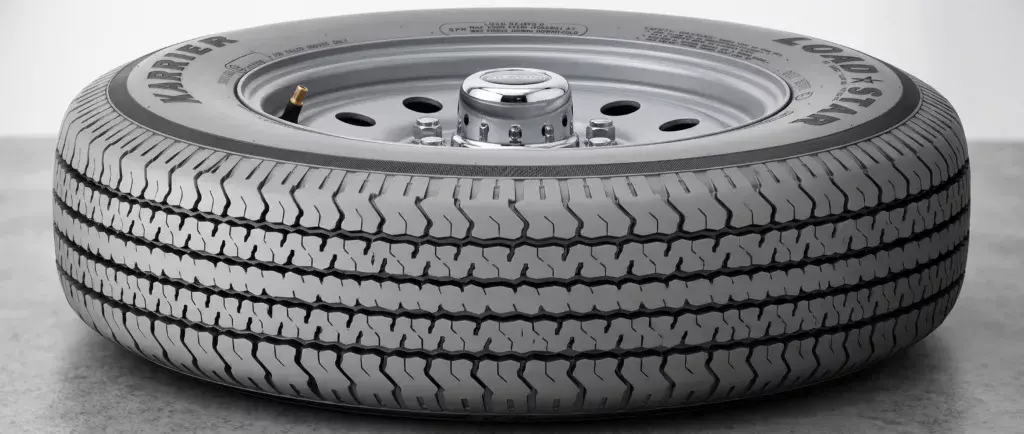
Who it’s best for: Families who want a dependable radial and often find it already fitted as the factory tire on a new trailer.
What I like:
– Solid all-around radial at a fair price.
– Widely available in common pontoon trailer sizes.
– A safe, no-drama choice for typical weekend towing.
What could be better:
– Nothing stands out as best-in-class – it’s a steady middle-of-the-road tire.
Skipper Sam’s take: A lot of new pontoon trailers roll off the lot wearing Kendas, and there’s a reason. They just work. If your factory tires are still fresh, keep an eye on the date code and ride them out – but replace them before they hit five years no matter how the tread looks.
Trailer King ST Radial II – Best Budget Pick
Who it’s best for: Tight budgets, light single-axle trailers, and short hauls to a nearby lake.
What I like:
– One of the friendliest prices out there for a real ST radial.
– Fine for light loads and low-mileage weekend trips.
– Lets you replace the whole set without breaking the bank.
What could be better:
– Not the tire I’d trust for long highway hauls or heavy tritoons.
Skipper Sam’s take: I won’t pretend this is a premium tire. But for a light trailer that stays close to home, it’s honest value. Just don’t ask a budget tire to do a premium tire’s job on a 300-mile trip. Match the tire to the miles you actually drive.
Carlisle Sport Trail LH Bias-Ply – Best Backup & Spare
Who it’s best for: A dependable spare, or a light utility trailer that rarely sees highway speed.
What I like:
– Tough, simple bias-ply build at a low price.
– A trusted name for a “get me home” spare.
– Handles rough launch ramps and gravel lots well.
What could be better:
– Bias-ply runs hotter and rides rougher than a radial at highway speed.
Skipper Sam’s take: Every trailer should carry a good spare, and this is a smart one to bolt on. **A spare you never use still saved your whole trip the day you need it. Keep it aired up and check it every spring – a flat spare is no spare at all.
What to Look for When Buying Pontoon Trailer Tires
Buying a trailer tire isn’t like buying a car tire. The rules are different, and getting them wrong is how families end up stranded. Here’s what I’ve learned in 20 years of hauling boats to the water.
Buy ST (Special Trailer) Tires – Not Car Tires
This is the big one. Trailer tires say “ST” on the sidewall, and that stands for Special Trailer – never put passenger (P) or light truck (LT) tires on your trailer.
ST tires have stiffer sidewalls built to carry heavy loads and resist the sway a trailer produces. Car tires flex too much under a boat and can fail or cause dangerous swaying.
I’ve seen folks try to save a few bucks with leftover car tires. It’s a bad trade. The whole trailer rides and tows better on tires designed for the job.
Match the Load Range to Your Loaded Boat
Every tire has a load rating, marked as a Load Range letter like B, C, or D, plus a maximum weight. Add up your boat, motor, fuel, gear, and trailer, then make sure all your tires together can carry more than that total — with room to spare.
Don’t guess. Check your trailer’s GVWR sticker and weigh a loaded rig at a truck scale if you’re not sure.
A heavy tritoon needs a higher load range than a small fishing pontoon. When in doubt, size up. A tire working at its limit runs hot and fails early. Our [pontoon trailer buying guide](https://pontoonboatingforfamilies.com/best-pontoon-boat-trailer/) walks through matching a trailer and tires to your exact boat weight.
Radial vs. Bias-Ply – Which Wins?
You’ll see both types, and they tow differently.
Radials run cooler, ride smoother, and last longer on the highway — they’re the better choice for almost every family that tows any real distance. Bias-ply tires are cheaper and tougher against curb scuffs, which makes them a decent spare or a fine pick for a light trailer that never leaves the county.
For our rig, I run radials every time. The cooler running temperature alone is worth it, because heat is the number one killer of trailer tires.
Watch the Age, Not Just the Tread
Here’s the mistake that got me on Route 5. A trailer tire can look brand new and still be dangerous, because they age out before they wear out.
Trailers sit still for weeks or months, and the rubber dry-rots from sun and time even when the tread is deep. Check the DOT date code on the sidewall – the last four digits are the week and year it was made.
Replace trailer tires every five to six years, no matter how good the tread looks. I put a piece of tape in my glovebox with the install date so I never lose track.

Check Speed Rating and Inflation
Many older ST tires are only rated to 65 mph, and running faster builds dangerous heat. Newer premium tires like the Goodyear Endurance carry higher speed ratings, which matters if you cruise the interstate at 70.
Inflation is just as important. An underinflated trailer tire flexes, overheats, and blows – most trailer blowouts trace back to low pressure, not bad tires.
Check your pressure cold, before every trip, and keep a good gauge in the truck. Airing up to the max cold pressure on the sidewall is usually right for a loaded trailer.
Don’t Forget the Spare and a Basic Kit
A matching spare turns a ruined day into a 20-minute pit stop. Carry a properly inflated spare, a lug wrench that fits your trailer, and a jack rated for the load – before you need them, not after.
Polly and I keep a small roadside kit in the truck: gloves, a headlamp, wheel chocks, and that spare. It’s saved us more than once. A little prep beats standing on a hot shoulder wishing you’d packed better.
Pontoon Trailer Tire Size Guide
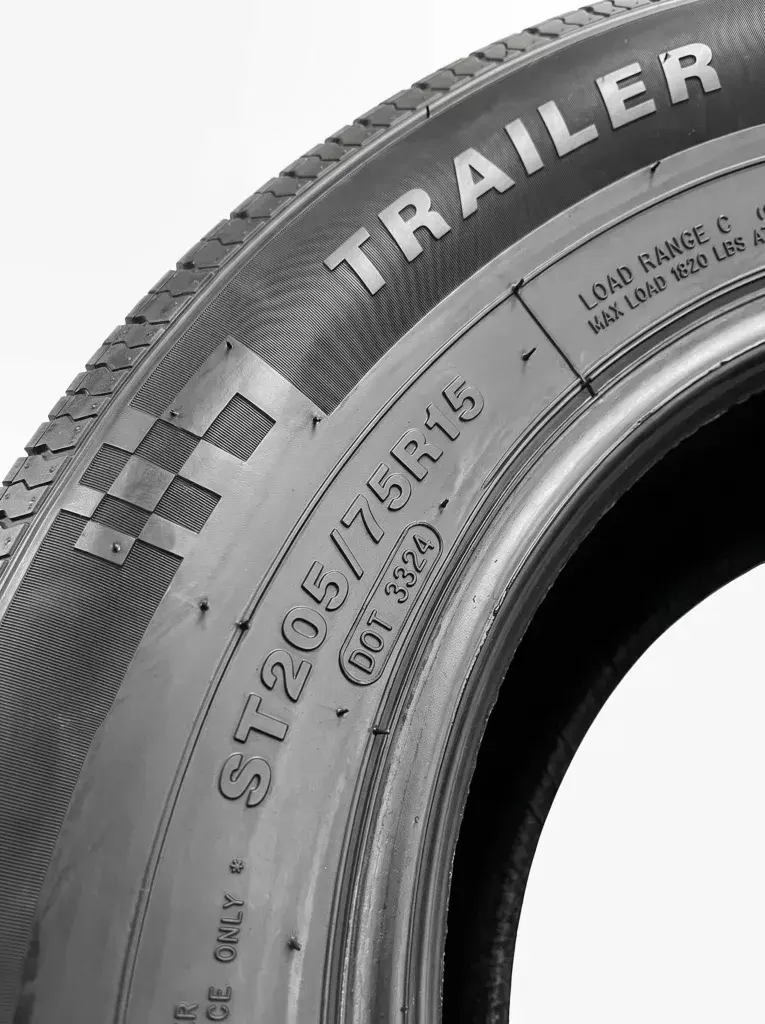
Reading a trailer tire size is simpler than it looks once you know the code. Say you see ST205/75R14 on the sidewall.
“ST” means Special Trailer. “205” is the width in millimeters. “75” is the sidewall height as a percent of the width. “R” means radial, and “14” is the wheel diameter in inches.
The easiest, safest move is to match the size already on your trailer – write down the full code from your current tire before you shop. If you want to change sizes, confirm the new tire clears your fenders and meets your load needs first.
Common pontoon trailer sizes run from ST205/75R14 up to ST225/75R15 for heavier boats. When you replace tires, it’s smart to replace all of them together so they wear and age evenly.
The Cost of Skipping Good Tires
Let me put real numbers to it. A quality set of four ST radials costs less than a nice bimini top.
A single blowout can cost you a shredded fender, a scratched boat, a towing bill, and a whole day of your family’s summer. The math isn’t close – good tires are the cheapest way to protect an expensive boat and an irreplaceable day.
I learned that the hard way on the side of Route 5. You don’t have to.
Frequently Asked Questions
What size tires do I need for a pontoon trailer?
Match the size printed on your current tires – the full code like ST205/75R14 is stamped right on the sidewall. Most pontoon trailers use sizes from ST205/75R14 to ST225/75R15, with heavier boats needing the larger, higher-load options. Always confirm the load range covers your fully loaded boat, motor, and gear. When in doubt, size up rather than down.
Are ST trailer tires really better than car tires for a pontoon?
Yes, and it’s not close. ST (Special Trailer) tires have stiffer sidewalls built to carry heavy loads and resist trailer sway, while car tires flex too much under a boat and can fail or cause dangerous swaying. Putting car tires on a trailer to save money is a trade I’d never make with my family in the truck. Stick with ST tires every time.
How often should I replace pontoon trailer tires?
Replace them every five to six years no matter how much tread is left. Trailer tires age out before they wear out because they sit still for weeks and dry-rot from sun and time. Check the DOT date code on the sidewall – the last four digits show the week and year the tire was built. Deep tread on an old tire is a blowout waiting to happen.
What’s the difference between radial and bias-ply trailer tires?
Radials run cooler, ride smoother, and last longer on the highway, which makes them the better choice for almost any family towing real distance. Bias-ply tires are cheaper and more resistant to curb damage, so they work well as a spare or on a light local trailer. For highway trips, I run radials every time. The cooler running temperature alone protects you from heat-related failures.
Why do trailer tires blow out so often?
Most trailer blowouts come down to three things: low air pressure, old age, and overloading. An underinflated tire flexes and overheats until it fails, and heat is the number one killer of trailer tires. Check your pressure cold before every trip, replace tires on age, and never load past their rating. Do those three things and blowouts become rare.
Do I really need a spare for a short trip to the lake?
Absolutely. A blowout doesn’t check how far you’re driving, and a flat with no spare can strand your family on a hot shoulder for hours. A matching, properly inflated spare turns a disaster into a quick pit stop. Keep a lug wrench and a rated jack with it, and check the spare’s air and age every spring.
The Bottom Line – My Top Picks
After 20 years of hauling boats to Lake Erie and back, here’s how I’d spend the money.
Best budget pick: the Trailer King ST Radial II. For a light trailer that stays close to home, it’s honest value that lets you replace the whole set at once.
Best overall: the Goodyear Endurance ST Radial. It runs cool, handles highway speed, and gives you that priceless “I’m not thinking about my tires” feeling on a long haul.
Best premium for heavy boats: the Maxxis M8008. If you tow a big tritoon or a tandem-axle trailer, its heat resistance and strong sidewalls are worth every dollar.
Here’s my honest recommendation: for most families, put Goodyear Endurance tires on your trailer, carry a good spare, and check your pressure and date codes every spring. That’s the setup Gigi and I trust, and it’s kept us off the shoulder and on the water.
Before your next trip, run through our [pre-trip pontoon checklist](https://pontoonboatingforfamilies.com/pontoon-towing-checklist/) so nothing catches you by surprise on the highway.
Safe travels, smooth towing, and I’ll see you at the launch ramp.
Quick reminder: this post contains affiliate links, and I may earn a small commission at no extra cost to you. I only point you toward gear I’d trust under my own family’s boat.