
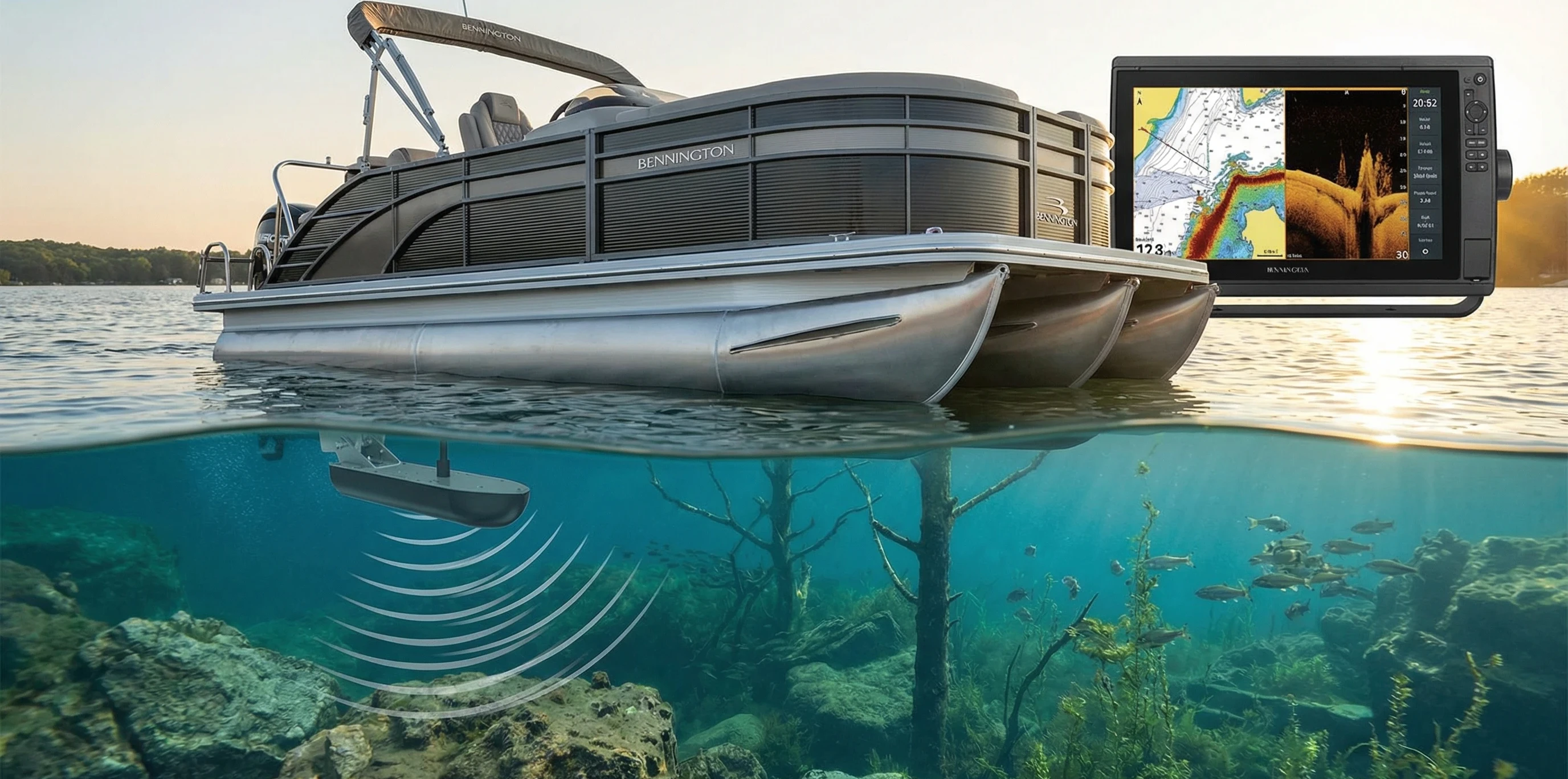
Outfitting a pontoon boat with side scan sonar opens up a whole new world for anglers and recreational boaters. I’ve spent plenty of time experimenting with different sonar tech on my own boat, and I’ve seen how side scan imaging can transform an average fishing trip into something way more productive.
Whether you’re scouting for schools of fish, searching for underwater features, or just curious about what’s lurking beneath the surface, a good side scan sonar setup makes things a lot easier.
Let’s be honest, it makes your time on the water a lot more fun too.
 **Here’s a little transparency: Our website contains affiliate links. This means if you click and make a purchase, we may receive a small commission. Don’t worry, there’s no extra cost to you. It’s a simple way you can support our mission to bring you quality pontoon boating content.
Best Side Scan Sonar for Pontoon Boats (Top Picks)
Best Overall: Garmin ECHOMAP UHD2 93sv
- SideVu + ClearVu imaging
- Touchscreen + GPS mapping
- Best for serious anglers
Best Value: Humminbird HELIX 7 CHIRP MEGA SI GPS G4
- MEGA Side Imaging (super detailed)
- Great mid-range price
- Easy to learn
Best Budget: Garmin Striker Vivid 7sv
- Affordable side imaging
- No mapping but great sonar
- Perfect starter unit
| Model | Screen Size | Imaging Type | GPS | Best For | Price |
|---|---|---|---|---|---|
| Garmin ECHOMAP UHD2 93sv | 9” | SideVu + ClearVu + CHIRP | ✅ Yes | Best Overall / Serious Anglers | 🔘 Check Price on Amazon |
| Humminbird HELIX 7 CHIRP MEGA SI GPS G4 | 7” | MEGA Side Imaging + Down Imaging | ✅ Yes | Best Value / Detail Imaging | 🔘 Check Current Pricing |
| Garmin Striker Vivid 7sv | 7” | SideVu + ClearVu | ❌ No | Best Budget / Beginners | 🔘 See specs |
| Lowrance Elite FS 9 | 9” | Active Imaging 3-in-1 (Side/Down/CHIRP) | ✅ Yes | Best for Large Lakes / Mapping | 🔘 Check Price |
| Humminbird SOLIX 10 CHIRP MEGA SI+ | 10.1” | MEGA SI+ (Ultra High Detail) | ✅ Yes | Premium / Tournament Level | 🔘 See Details |
Getting to Know Side Scan Sonar on Pontoon Boats
Side scan sonars use sound waves to create detailed images of what’s on either side of your boat, not just directly below it. The images you get are almost like black and white photographs of the underwater terrain. On a pontoon boat, adding this tech means more than just seeing fish. It helps you avoid obstacles, locate lost items, and even spot submerged structures that could be perfect fishing hot spots.
Pontoons sit higher in the water and are more stable than some other boats. This stability makes them really great for installing sensitive electronics like side scan sonar. The larger, flat deck space also means you have more room to mount displays and transducers just where you want them. Those who like to have several gadgets and screens running at once will love how much layout flexibility these boats offer.
How Side Scan Sonar Works and Why It’s Useful
Side scan isn’t the same as traditional sonar, which is sometimes called down imaging. Instead of sending sonar pings straight down, a side scan system fires them out in a wide fan shape to the left and right of the boat. The reflected echoes form an image of what’s hiding on the bottom and in the water column on both sides. If you’ve ever wanted to “see around corners” under the water, this is about as close as it gets.
Most sonar setups will let you adjust the range of the scan, tweak sensitivity, and zoom in on interesting objects. You’ll start to spot the shadowy outlines of rocks, trees, sunken boats, and of course, fish. Once you’re familiar with how to read these images, you get a nearly unfair advantage during your next fishing trip or underwater exploration session. And as you gain confidence, you can start picking up subtle differences between types of structure and fish size or species.
Seasoned anglers sometimes say side scan is as important as their rods and reels. The ability to cover so much ground visually-without having to drop a lure and wait-gives you a smart head start. Beginners will especially appreciate the straightforward way most systems highlight targets and let you save favorite locations for later.
Must-Have Accessories for Side Scan Sonar
- YakAttack CellBlok Battery Box (portable power)
- Scotty Transducer Mounting Arm
- Marine wiring kits
- Screen covers
Best Transducer Mounts for Pontoon Boats (Stable, Clear Imaging Setups)
Choosing the right transducer mount for your pontoon boat is just as important as choosing the sonar unit itself. A poorly mounted transducer can cause interference, weak readings, or completely distorted side imaging. On pontoons, the goal is simple: get your transducer into clean, turbulence-free water and keep it stable at all speeds. (support.norcross-outdoors.com)
Below are the best mounting options based on real-world pontoon setups.
Best Overall: Rail Clamp / Pole Mount Systems
If you want the cleanest side scan images possible, this is the setup serious anglers use.
Why it works:
- Keeps the transducer completely below turbulence
- Adjustable depth and angle for perfect imaging
- No drilling into pontoons required
- Ideal for side imaging and Livescope setups
👉 Best for: anglers, high-end sonar, and frequent use
Best Value: Adjustable Transducer Arm Mount
This is a great middle-ground option that balances performance and price.
Why it works:
- Fully adjustable positioning
- Easy to deploy and retract
- Strong aluminum construction
- Works well on rail systems or custom mounts
👉 Best for: flexibility + easy installation
Best Budget: Clamp-On Transducer Mount
If you’re just getting started, this is the easiest way to get on the water fast.
Why it works:
- Simple clamp-on design (no drilling)
- Lightweight and portable
- Quick setup and removal
- Great for casual use
👉 Best for: beginners and occasional boaters
Transducer Mount Comparison Table
| Feature | Gen3 Pontoon Rail Clamp Transducer Pole Mount | RAM Mounts Transducer Arm Mount | Scotty Transducer Mount |
|---|---|---|---|
| Mount Type | Rail Clamp / Pole | Adjustable Arm | Clamp-On |
| Stability | ⭐⭐⭐⭐⭐ | ⭐⭐⭐⭐ | ⭐⭐⭐ |
| Adjustability | Full depth + angle | Multi-angle | Limited |
| Install Difficulty | Medium | Easy | Very Easy |
| Drilling Required | ❌ No | ❌ No | ❌ No |
| Best For | Serious anglers / Side Imaging | Versatility | Beginners / Budget |
| Price | 🔘 Check Price | 🔘 Check Price | 🔘 Check Price |
Pro Setup Tips (This Improves Your Sonar Instantly)
- Mount on the rear of the pontoon, not near the motor
- Keep it below the pontoon tube for clean readings (support.norcross-outdoors.com)
- Avoid turbulence, ladders, and prop wash
- Position away from electrical wiring to reduce interference (Better Boat)
- Test at 3–5 mph to dial in clarity
Bottom Line
If you’re running side scan sonar on a pontoon:
- Go rail/pole mount → best performance
- Go RAM arm → best flexibility
- Go clamp-on → easiest and cheapest
The mount you choose directly impacts how clear your sonar images are-don’t overlook it.
Key Considerations for Pontoon Owners Installing Side Scan Sonar
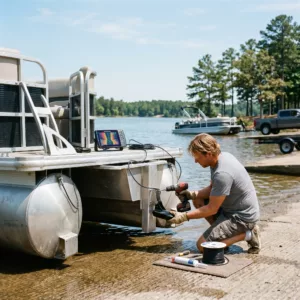
Mounting a side scan unit on a pontoon boat is a bit different than sticking one on a V-hull or bass boat. Here are some things I pay extra attention to:
- Transducer placement: Getting the transducer below the waterline and free from bubbles or turbulence from the pontoons is super important for clear images.
- Wiring and power: Pontoons usually have plenty of space to run cables, but make sure your connections are snug and waterproof to avoid headaches later.
- Display location: Easy line of sight at the helm makes using your sonar way less hassle. Mount your screen where you can glance down without losing track of your heading.
Most folks find that a transom mount, attached on the back edge of one pontoon, is easiest, but there are also brackets designed specifically for pontoon boats. Some newer models come with multifunction clamps or through-hull options. If you go the DIY route, check for full water coverage so the sonar image doesn’t get blocked by the pontoon tubes.
Double-check cable routing before you drill or tie anything off. It’s worth the extra few minutes to ensure everything works flawlessly, and you won’t need to fix it in the middle of a trip. If you’re unsure, most marine service shops have experience working with pontoons and can handle specialized installs.
The Pros and Cons: When Side Scan Sonar Makes Sense
Adding side scan sonar gives you loads of advantages, but it’s not all smooth sailing. After a while on the water, here are the main upsides and downsides I’ve noticed:
- Detailed imagery: Spot fish, cover, drop-offs, and brush piles that regular sonar misses.
- Wider coverage: Scan massive swaths of lakebed with each pass. This is way faster than driving in zig-zags with only a down imaging view.
- Navigation perks: Avoid rocks, stumps, or sandbars before they become a problem, saving costly repairs and hassle.
But there are tradeoffs:
- Learning curve: The high resolution images take a while to get used to. Interpreting them smoothly is a skill in itself, but learning is part of the fun.
- Price: Quality units with large screens don’t come cheap, especially with add ons like GPS or WiFi setup.
- Installation quirks: Getting the transducer right on a pontoon may need custom brackets or pro install, particularly if you want super clean images.
So, is side imaging worth the extra money? If you’re serious about fishing or love exploring underwater features, absolutely. The level of info you get justifies the spend, and the extra fun on the water makes it even more worthwhile. For folks who only use their boat a few weekends each season, the investment may not pay off as quickly, but the findings can still be eye-opening.
Common Questions About Side Scan Sonar and Pontoon Boats

Building up experience with side scan on my own pontoon, I get these questions a lot:
What are the disadvantages of side scan sonar?
Besides the steep learning curve, side scan can struggle in deep or rough water. The farther down you scan, the less detail you get. Side scan images may also get blurry at higher boat speeds, and murky water full of weeds can mess with clarity. Finally, mounting a transducer perfectly on some pontoons takes patience and maybe some creative engineering.
Can you put a Livescope on a pontoon boat?
You absolutely can. Livescope (like Garmin’s popular system) works on pontoons as long as you have the right bracket or pole for the transducer. Many folks use trolling motor mounts or specialized shafts that let you lower the transducer over the side. Just keep in mind you’ll want stable power and solid cabling to your display. Once installed, it’s pretty wild watching live, video-like images of fish and structure under your boat.
Is Side Imaging worth the extra money?
For anyone who spends a lot of time on the water fishing or exploring, the answer is yes. The extra detail and coverage you get from side imaging helps identify hotspots faster, reduces guesswork, and often means more bites. For casual boating or small lakes, you might not need it, but most folks who invest in side scan say they’d never go back to basic sonar alone.
How much does the Omni sonar cost?
Omni sonar systems are a different beast, mostly used on commercial or large research vessels. These systems can start at around $100,000 and easily reach several hundred thousand dollars, depending on features. For recreational boaters, traditional side scan and Livescope are the more practical (and affordable) picks.
What brand has the best side scan?
This is a bit subjective. In my experience and research, Humminbird, Lowrance, and Garmin are all top options for side scan tech on recreational boats. Each has models designed for pontoons. Humminbird’s MEGA Side Imaging, featured in models like the Humminbird HELIX 7 CHIRP MEGA SI GPS G4, is especially popular among anglers who want ultra-detailed bottom imaging. Choosing between them usually comes down to which interface and features feel best to you.
How deep can you use a side scan?
Most recreational side scan sonars work best in water up to about 100 to 300 feet deep. Some of the more advanced commercial units can image even deeper, but for lake and river fishing, you’ll probably max out long before the sonar runs out of steam. Clarity drops off at those deeper levels, so keep expectations realistic if you’re fishing over deep structures.

What is the best speed for a side scan?
Staying between 3 to 5 mph (about 5 to 8 km/h) is ideal. Go slower, and you get crisp, detailed images. Go faster, and the images can get stretched or blurry. On a pontoon, this speed fits perfectly with slow cruises around coves or along dropoffs, just right for scanning and marking waypoints. Remember that some unit models have “auto speed” settings that help dial in clarity if you do end up changing speeds a lot.
Tips for Getting the Most Out of Your Side Scan Setup
- Tune settings often: Water depth, bottom composition, and clarity all change. Fiddle with contrast and sensitivity as conditions shift to get the best picture.
- Mark interesting finds: Drop digital waypoints on fish, debris, or structure with one tap. This makes it much easier to revisit the same spot next trip.
- Practice image reading: Study the difference between real fish, shadows, plants, and sunken logs. The more you scan, the easier it gets to spot these at a glance.
- Keep your gear clean: Watch for algae or barnacles on the transducer, especially after trips in murky or weed heavy water. Take a soft cloth and some gentle soap to wipe it down after every trip if you want consistent performance.
If you’re using a combo setup like down scan plus side scan, switch view modes regularly. Sometimes down imaging gives more detail if you’re right on top of something, while side scan shines as you move parallel to breaklines or shoreline.
To get even more out of your setup, consider downloading sonar logs to view them on your computer later. Some systems allow you to upload recorded sonar passes to mapping apps, revealing big patterns you missed on the water. If you fish competitively, reviewing your scans can show you new spots that only pop out when you study the whole lake map at home.
Best Side Scan Sonar for Specific Needs
- Best for Fishing → Garmin ECHOMAP
- Best for Beginners → Garmin Striker
- Best for Large Lakes → Lowrance Elite FS
- Best for Budget → Humminbird Helix 7
Real-World Uses for Side Scan Sonar on Pontoon Boats
Some folks buy side scan just for fishing, but there are other creative uses for it as well:
- Lost item recovery: Drop your keys, phone, or even an anchor? Scan the area and spot exactly where it ended up, which saves a lot of diving or guesswork.
- Scenic cruising: Check out shipwrecks, rock formations, and underwater caves as you tour new lakes or rivers. Even if you aren’t fishing, you can enjoy tracking down what’s on the bottom.
- Wildlife watching: Find schools of fish or even the occasional curious turtle or sturgeon lurking just off the boat. These moments add a new flavor to casual boating.

Having side scan on a pontoon, I’ve saved hours of guessing and gotten more excitement out of every trip. It brings a bit of high tech flair to relaxing afternoons and makes even familiar spots feel brand new again.
If you want to get more friends or family fired up about fishing or boating, letting them spot cool things under the water is a sure way to get everyone hooked. Younger boaters especially love seeing a world most people never get to peek into.
Frequently Asked Questions
Question: Which side scan sonar is easiest for a first-time user?
Answer: Units from Garmin, Lowrance, and Humminbird all come with beginner friendly menus. Humminbird Helix and Garmin Striker lines are especially easy to set up and start scanning with right away.
Question: Is there a portable side scan sonar for pontoons?
Answer: Yes, portable setup kits are available for several brands. These usually include clampon mounts and carry friendly battery packs, making it easy to add side scan without drilling holes.
Question: Can I upgrade my basic fishfinder to side imaging later?
Answer: Some brands offer plug and play upgrades, but usually you’ll need a new transducer and display unit. Check with your manufacturer for compatibility before you buy.
Adding side scan sonar to your pontoon boat brings more insight and more fun to your time on the water. Whether you’re chasing that next trophy fish or just enjoying a relaxed day cruising, the extra eyes underwater really do make a difference. As tech keeps moving ahead, expect side scan to get even easier and more eye-catching for all boaters.