Pontoon boats are known for their stability and comfort, but they still need the right anchor to stay put. Whether you’re fishing, swimming, or relaxing with family, a secure anchor keeps your boat from drifting. At the end of the day, the right anchor can make the difference between a peaceful afternoon on the water and a stressful struggle to stay put. With the right know-how, you’ll anchor like a pro.
If you frequently anchor while swimming or fishing, upgrading your pontoon boat safety gear can also make your time on the water much safer.
**Here’s a little transparency: Our website contains affiliate links. This means if you click and make a purchase, we may receive a small commission. Don’t worry, there’s no extra cost to you. It’s a simple way you can support our mission to bring you quality pontoon boating content.
Top Recommended Anchors for Pontoon Boats
| Anchor | Best For | Key Features | Why It’s Worth It | Price |
|---|---|---|---|---|
| Fortress FX-7 Anchor | Maximum holding power | Lightweight aluminum, adjustable flukes | Extremely strong holding with low weight | $$ |
| Extreme Max BoatTector Fluke Anchor | Sand & mud bottoms | Galvanized steel, wide flukes | Great value anchor for pontoons | $ |
| Attwood Mushroom Anchor | Calm lakes | Vinyl coating, wide mushroom base | Simple and reliable for short stops | $ |
| Seachoice Navy Anchor | Mixed bottoms | Cast iron construction, classic navy design | Good all-around anchor | $$ |
| Slide Anchor Box Anchor | Quick setting | Self-setting design, collapsible | Excellent for windy lake conditions | $$$ |
Navigating the sea of available anchors can feel overwhelming, but getting to know the popular types can streamline your decision.
Fluke Anchors
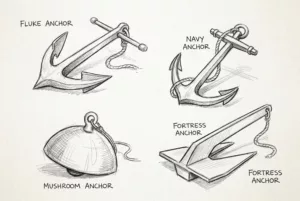
Fluke anchors are one of the most popular choices for pontoon boats because they dig deeply into sandy or muddy bottoms. A great example is the Extreme Max BoatTector Fluke Anchor, which offers strong holding power while remaining lightweight enough for most pontoon owners to handle easily.
Best for sandy and muddy bottoms. Lightweight yet powerful holding.
Downside: can snag on rocks.
Mushroom Anchors
Mushroom anchors are commonly used for calm lakes with soft bottoms. Options like the Attwood Vinyl-Coated Mushroom Anchor provide a simple and affordable solution for short stops while swimming or relaxing.
Ideal for soft, oozy lakebeds.
Great for short stops in calm water.
Weak on firm or rocky ground.
Navy Anchors
Versatile and works on multiple bottom types. Reliable for mixed conditions. Slightly heavier and harder to stow.
Fortress Anchors
Fortress anchors are known for incredible holding strength thanks to their aluminum construction and adjustable flukes. The Fortress FX-7 Anchor is a favorite among serious boaters who want maximum security without the weight of traditional steel anchors.
Known for sheer holding power.
Lightweight aluminum construction.
Premium option, sometimes pricey.
Choosing the Right Anchor Weight
Anchor weight depends on your pontoon’s size and your typical boating environment:
– Under 20 ft pontoons: 10–15 lb anchor.
– 20–24 ft pontoons: 15–25 lb anchor.
– Over 24 ft pontoons: 25–35 lb anchor or heavier.
Always size up if you boat in windy or wavy conditions.
Learning from Real Boaters
Hearing from those who’ve been in the thick of things can be super beneficial. Many pontoon owners swear by navy anchors for versatility, while fortress anchors get rave reviews for gripping even in tough conditions.
Deploying and Setting Your Pontoon Boat Anchor Correctly
Anchoring isn’t just about dropping an anchor overboard and hoping for the best. Proper technique makes the difference between drifting and staying secure.
The Basics:
1. Check water depth. Multiply it by 5–7 to figure out how much line (rode) to let out.
2. Lower slowly. Don’t toss-feed it out steadily.
3. Set the anchor. Once it hits bottom, pull back gently to let it dig in.
Adjusting for Conditions:
– Calm water: A light tug is often enough.
– Windy/choppy water: Let out more line for stronger hold.
– Anchor dragging: Reset in a new spot or try a different anchor style.
Helpful Anchor Accessories for Pontoon Boats
| Product | Why It Helps | Best For |
|---|---|---|
| Seachoice Anchor Line Rope (100 ft) | Pre-spliced with thimble | Reliable rode for most anchors |
| Extreme Max Anchor Chain | Protects rope from abrasion | Better holding power |
| Attwood Anchor Lift System | Makes raising anchors easier | Larger pontoons |
| Young Marine Anchor Rope | Budget option | Small pontoons |
Troubleshooting Common Anchor Problems
– Dragging: Could be the wrong anchor type, not enough line, or poor bottom conditions.
– Tangles: Always flake your line neatly before dropping.
– Snagged anchor: Drive gently around it from the opposite direction to free it.
Maintenance and Care: Extending the Life of Your Pontoon Boat Anchor
Keeping your anchor in top shape means fewer hassles and more time to relax.
– Check the line: Look for frays or wear and replace when needed.
– Rinse after use: Especially in saltwater-wash with fresh water.
– Fight corrosion: Spray with anti-corrosion protectant.
– Store properly: Keep in a cool, dry place or in a protective container.
– Know when to replace: If slipping becomes frequent or metal shows deep wear, upgrade.
Safety Considerations While Anchoring
– Never wrap anchor line around your hand or body.
– Keep passengers clear of the anchor area while lowering/raising.
– Always carry a backup anchor, just in case.
– Use gloves when handling chain or heavy rope.
Anchor Winches That Make Anchoring Easier
Minn Kota Deckhand 40 Electric Anchor Winch
Benefits:
-
Deploys and retrieves anchor automatically
-
Handles anchors up to 40 lbs
-
Excellent upgrade for pontoon boats
Trac Outdoor Electric Anchor Winch
Benefits:
-
Compact system
-
Good for smaller pontoons
-
Affordable automation
Final Thoughts
Anchoring your pontoon isn’t just about staying still-it’s about safety, relaxation, and making the most of your time on the water. With the right anchor, the proper technique, and a little care, you can count on your boat staying exactly where you want it.
The right anchor gives you freedom to fish longer, swim safely, and relax without worry. Master these basics, and you’ll be anchoring like a seasoned pro in no time.
Where to Buy: Shop the Best Pontoon Anchors
Ready to pick up a new anchor for your pontoon? The right choice depends on your boat size, the waters you frequent, and your personal preferences for handling weight and storage. We’ve reviewed the most popular options, and these anchors consistently rank as favorites among pontoon boaters:
– Fluke anchors for sandy or muddy bottoms.
– Mushroom anchors for calm lakes with soft beds.
– Navy anchors for all-around versatility.
– Fortress anchors for lightweight strength and holding power.
Pro Tip: Always buy from reputable marine supply stores or trusted online retailers. Many offer anchor packages that include the line and chain, saving you time and money.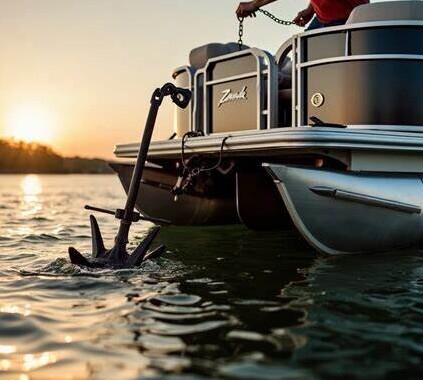
Advanced Tips for Confident Anchoring
Once you’ve mastered the basics of anchoring your pontoon, it’s worth learning some advanced techniques that can help in trickier conditions. These strategies are especially useful if you boat in areas with variable weather, shifting currents, or when anchoring overnight.
One common technique is the double anchor method, where you deploy two anchors instead of one. This approach provides extra holding power and minimizes swing, which is particularly helpful if you’re fishing in a tight spot or spending the night on the water. Place the anchors at roughly a 45-degree angle from each other so they hold the boat steady against changing wind directions.
Another trick seasoned boaters use is the stern anchor setup. By dropping a secondary anchor from the back of the pontoon, you can keep the boat aligned in a specific direction. This method is handy when swimming or when you want the boat to face a certain way, like keeping the deck shaded from the sun or aligned with the current.
Currents can complicate anchoring, but knowing how to read the water makes a big difference. Watch for ripples, floating debris, or changes in water flow to determine the best angle to drop your anchor. Positioning your boat so the bow faces into the current usually ensures the most secure hold.
Finally, consider investing in anchor retrieval systems like electric anchor winches or pulley setups. These not only save your back when lifting heavy anchors but also allow for quick repositioning if the first attempt doesn’t hold. Many pontoon boaters say this upgrade is a game-changer, especially for those who anchor frequently.
Anchor your fun today. Source now.
Best Pontoon Anchors by Category
Best Overall Anchor
Fortress FX-7 Anchor
Best Budget Anchor
Extreme Max BoatTector Fluke Anchor
Best Anchor for Calm Lakes
Attwood Mushroom Anchor
Best Anchor for Windy Conditions
Slide Anchor Box Anchor